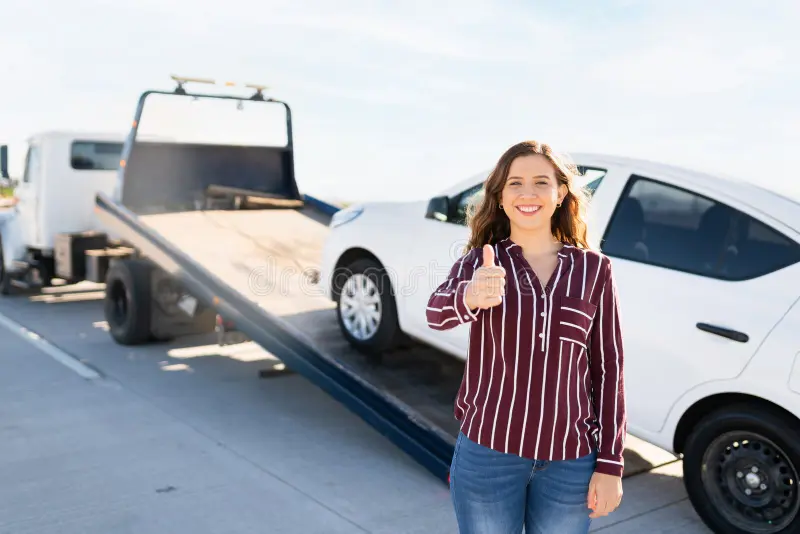
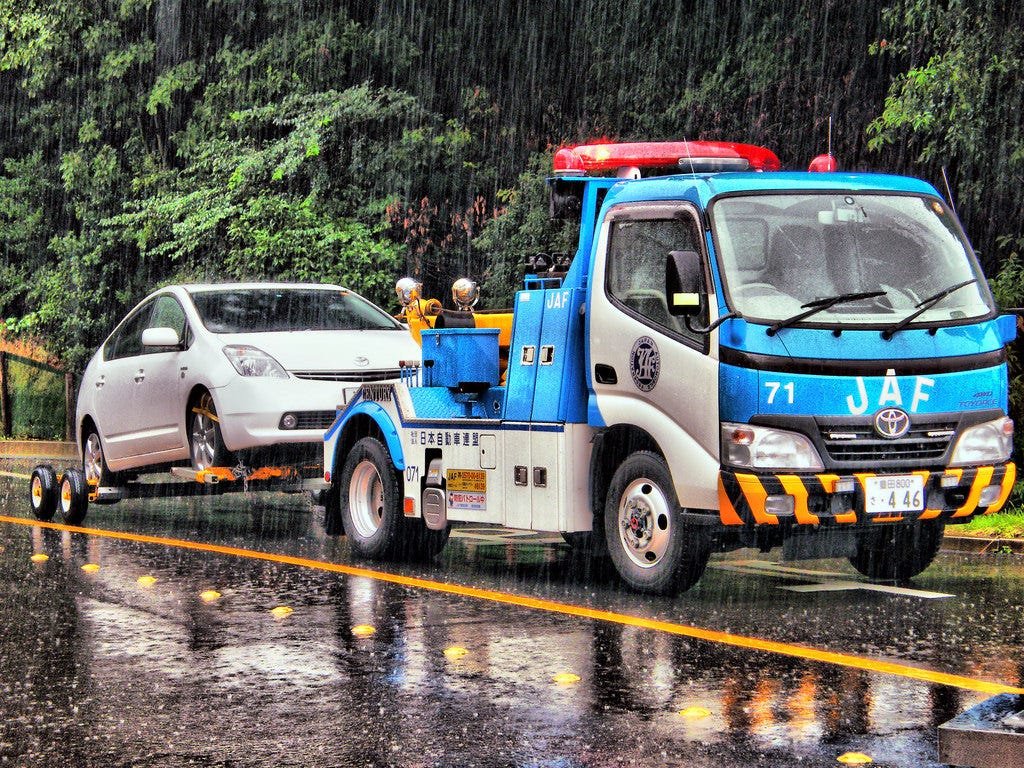
You have the motorhome, the route and the campsite booked. The last piece is the car you will bring along, so you can run to the store, explore a trailhead or head into town without breaking camp. That is where flat tow vehicles come in. They can roll behind your RV on all four wheels with nothing more than a tow bar, a base plate and the right safety gear.
The catch is that most new cars cannot be flat towed. Automakers approve only certain models, drivetrains and transmissions, and the list changes every model year. Pick the wrong car and a single road trip can ruin a transmission that costs thousands to replace.
This guide gives you the 2026 list of flat towable vehicles, explains why some cars qualify and others do not, covers the equipment and California rules you need to know, and tells you what to do when a vehicle cannot (or will not) be towed four-down.
The quick answer:
- Flat tow vehicles are cars, SUVs and trucks the manufacturer approves for towing with all four wheels on the ground, also called dinghy or four-down towing.
- For 2026, most approved models are 4WD trucks and SUVs with a two-speed transfer case that has a Neutral position, plus a few hybrids and one manual-transmission sports car.
- You will need a base plate, tow bar, safety cables, tow lights and, in most states, a supplemental braking system.
- Always confirm in the owner’s manual under “Recreational Towing” or “Dinghy Towing” before you hook up.
What Are Flat Tow Vehicles?
Flat towing means pulling a vehicle behind a motorhome with all four of its tires rolling on the road. RVers call the towed car a “toad” or “dinghy,” because it follows the big rig the way a small boat follows a yacht.
Flat tow vehicles connect to the motorhome with a tow bar that bolts to a base plate mounted on the car’s front frame. There is no trailer to store and no dolly to load, so hooking up and unhooking takes only a few minutes once you have the routine down. That convenience is why flat towing is the most popular way to bring a car on an RV trip.
It also explains why the approval matters so much. When a car rolls on its own wheels with the engine off, its drivetrain is turning too. Only some designs can handle that for hundreds of miles without damage.
What Vehicles Can Be Flat Towed?
So, what vehicles can be flat towed? The short answer is the ones the manufacturer says can be, in writing, for that exact model year, drivetrain and transmission. Three design features usually decide it.
4WD With a Two-Speed Transfer Case and Neutral
Most of today’s flat towable vehicles are four-wheel-drive trucks and SUVs with a two-speed transfer case. When you shift the transfer case into Neutral, it disconnects the wheels from the transmission, so the tires can spin freely without turning the gears inside. That is why a Jeep Wrangler or a Chevrolet Tahoe 4WD can be towed, while the same model with a single-speed system or two-wheel drive often cannot.
Manual Transmissions
A manual gearbox does not rely on an engine-driven oil pump in the same way an automatic does, so many manual cars can be towed in neutral. The trouble is that very few new vehicles still offer a stick shift. For 2026, the Nissan Z with the manual transmission is the only car on the approved list for that reason.
Certain Hybrids
Some hybrid powertrains use a planetary gear system instead of a conventional automatic, and a few are approved for flat towing when you follow a specific “Neutral Tow” procedure. In 2026, that includes select Ford Escape, Ford Maverick and Lincoln Nautilus hybrids. These procedures can include time limits and steps you must repeat, so read them closely.
Why Most Automatic Cars Do Not Qualify
In a typical automatic transmission, the engine powers the pump that circulates transmission fluid. When the car is towed with the drive wheels on the ground and the engine off, internal parts spin without lubrication. Heat builds, and the result can be a destroyed transmission. Most front-wheel-drive and all-wheel-drive automatics, and most fully electric vehicles, are not approved for flat towing.
The 2026 List of Flat Towable Vehicles
The list of flat towable vehicles below reflects 2026 manufacturer recreational-towing approvals as compiled by the RV LIFE 2026 Dinghy Towing Guide. Trims, options and procedures matter, so use this list to build your shortlist, then confirm every detail in the owner’s manual for the exact vehicle you plan to buy.
| Brand | 2026 Model | Key Condition to Check |
| Buick | Encore GX (AWD), Envista | Follow the owner’s manual towing procedure |
| Cadillac | Escalade 4WD, Escalade ESV 4WD, Escalade-V | Two-speed transfer case with Neutral |
| Chevrolet | Blazer AWD | Manual procedure required; 65 mph maximum |
| Chevrolet | Colorado 4WD, Silverado 1500 4WD, Silverado 2500/3500 HD 4WD, Suburban 4WD, Tahoe 4WD | Two-speed transfer case with Neutral |
| Chevrolet | Trailblazer AWD, Trax | Follow the manual procedure; confirm Trax approval in your manual, since dealer information has varied |
| Dodge | Durango AWD | Two-speed transfer case required |
| Ford | Bronco (not Bronco Sport), Expedition 4WD, F-150 4WD, Super Duty 4WD, Ranger 4WD | 4WD system with a Neutral position; follow the manual |
| Ford | Escape hybrid and plug-in hybrid, Maverick hybrid | Neutral Tow procedure; check time and speed limits |
| GMC | Canyon 4WD, Sierra 1500 4WD, Sierra 2500/3500 HD 4WD, Yukon and Yukon XL 4WD | Two-speed transfer case with Neutral |
| Jeep | Wrangler 4WD, Gladiator 4WD | Transfer case in Neutral per the manual |
| Jeep | Grand Cherokee 4WD, Wagoneer and Grand Wagoneer 4WD | Two-speed transfer case with 4WD Low |
| Lincoln | Navigator 4WD, Nautilus hybrid | Follow the manual procedure |
| Nissan | Z | Manual transmission only |
| Ram | 1500, 2500, 3500 4WD | Confirm transfer case type in the manual |
A few things stand out for 2026. The list keeps getting shorter as manual transmissions disappear and more models move to single-speed AWD systems. No 2026 Honda or Subaru models appear to carry an official approval, even though older CR-Vs and some earlier Subarus were RV favorites. If you are shopping used, the approval for that specific year is what counts, not this year’s list.
Flat Towable Cars vs. Trucks and SUVs: Which Is Best for You?
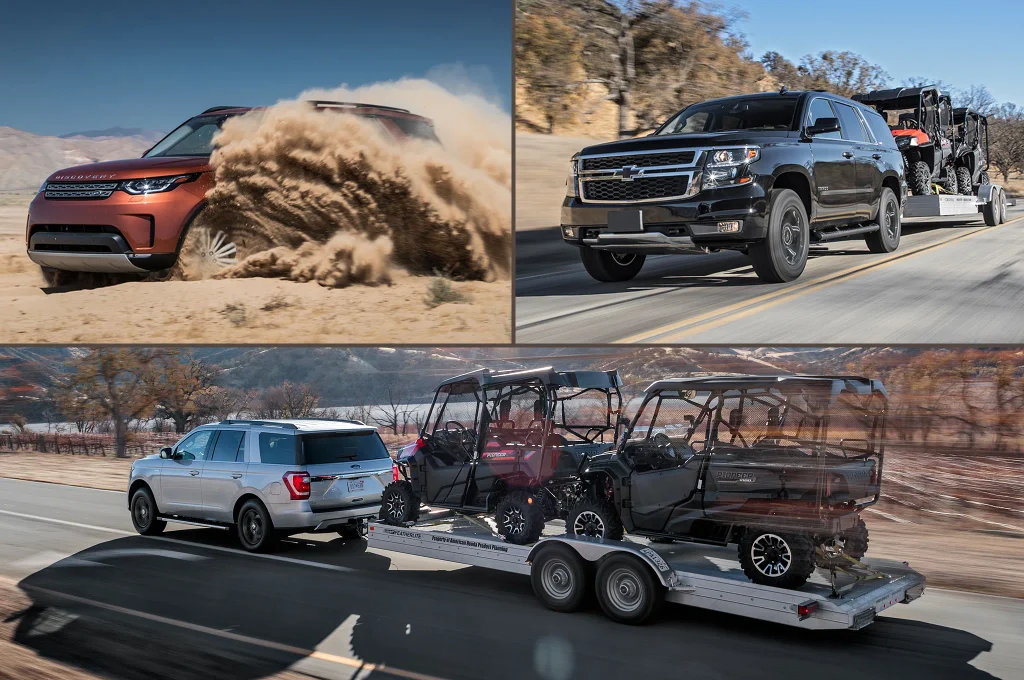
Truly flat towable cars are rare in 2026, so most RVers end up choosing between a compact SUV, a midsize SUV or a pickup. Here is how to weigh them:
- Weight: Your motorhome has a maximum towing capacity and a Gross Combined Weight Rating (GCWR). A lighter toad like a Buick Envista or Chevrolet Trax leaves more margin than a full-size Tahoe or Ram.
- Off-road ability: If your trips end at trailheads, a Jeep Wrangler, Gladiator or Ford Bronco is hard to beat.
- Space for passengers and gear: Families often prefer a Tahoe, Suburban, Yukon or Expedition for everyday use at camp.
- Fuel economy: Hybrids like the Ford Maverick or Escape cost less to drive around town once you are parked.
- Hookup routine: Some vehicles take two steps to prepare. Others need a longer sequence with fuses or timed engine starts. Pick one you will actually follow every time.
How to Choose the Right Flat Tow Vehicle
Before you sign at the dealership, run through this short checklist:
- Read the owner’s manual first. Look for “Recreational Towing,” “Dinghy Towing” or “Flat Towing.” If the section says not to tow with wheels on the ground, that vehicle is not one of your flat tow vehicles, no matter what a salesperson says.
- Match the exact configuration. Drivetrain, transfer case and transmission must match the approval. A 2WD or single-speed AWD version of an approved model usually is not approved.
- Check your RV’s limits. Add the toad’s curb weight plus any gear inside it, and compare that with your hitch rating, towing capacity and GCWR.
- Confirm base plate availability. Make sure a base plate is made for that model and trim, especially for brand-new redesigns.
- Ask about the battery. Some toads drain their battery in tow mode. A battery charge line or disconnect may be needed.
Essential Flat Towing Equipment
Even the best flat tow vehicles need the right gear to tow safely and legally:
- Base plate: Mounts to the toad’s frame and gives the tow bar a secure attachment point.
- Tow bar: Rated above the toad’s weight, with arms that lock and release smoothly.
- Safety cables or chains: A backup connection if the tow bar fails. They are required by law in the U.S. and Canada and are cross-connected under the tow bar.
- Tow lighting: Wiring or magnetic lights so the toad’s brake lights, turn signals and tail lights work with the motorhome.
- Supplemental braking system: Applies the toad’s brakes when you slow down. Most states require one, and it greatly shortens stopping distance.
- Breakaway switch: Stops the toad automatically if it separates from the RV. It is a legal requirement in many states.
- Battery charge line or disconnect: Keeps the toad’s battery from going flat on long tow days, if the manual calls for it.
How to Flat Tow a Vehicle Step by Step
Each manufacturer has its own procedure, but most hookups follow this order:
- Park the motorhome and toad in a straight line on level ground.
- Connect the tow bar to the base plate and the RV hitch, and lock the pins.
- Attach the safety cables, crossing them under the tow bar.
- Plug in the tow lighting and set up the supplemental braking system and breakaway cable.
- Complete the toad’s own procedure, such as shifting the transfer case to Neutral, setting the transmission, placing the ignition in the right position and releasing the parking brake.
- Pull any fuses or disconnect the battery if the manual requires it.
- Check every light with a helper, then drive forward slowly so the tow bar arms lock.
- Recheck the connection, tire pressure and toad settings at each fuel or rest stop.
When you unhook, reverse the steps and start the toad only after it is back in the correct gear and transfer case setting.
California Flat Towing Rules Sacramento RVers Should Know
If you are leaving Sacramento for Lake Tahoe, the coast or Yosemite with flat tow vehicles behind your motorhome, California has a few rules that catch out-of-state visitors and new RVers:
- 55 mph speed limit: Any vehicle towing another vehicle is limited to 55 mph in California (Vehicle Code 22406), even where cars can drive 65 or 70.
- Right-lane rule: Stay in the right-hand lane, or in either of the two right lanes on highways with four or more lanes in your direction, except when passing or turning.
- Safety chains: A safety chain or cable strong enough to control the towed car is required (Vehicle Code 29004).
- Overall length: The total length of a motorhome and toad combination is generally limited to 65 feet (Vehicle Code 35401).
Some flat tow vehicles also carry their own manufacturer speed limits, which may be lower or higher than the state limit. Always follow whichever is lower.
What If Your Car Cannot Be Flat Towed?
If your favorite car is not on the list, you still have options. A tow dolly lifts the front wheels, which works for many front-wheel-drive vehicles. An enclosed or open car trailer carries the whole car off the ground, which protects any drivetrain but adds weight and storage needs.
For moving a vehicle that is not flat towable to your RV storage lot, a campground or a shop, a flatbed tow is often the simplest choice. Your car rides fully on the deck with no wheels turning and no drivetrain wear. Our guide to Safe Flatbed Vehicle Transportation explains how that works and why it protects AWD and electric vehicles.
When Your Toad Breaks Down: Getting Help Fast
Even well-maintained flat tow vehicles have bad days. A dead battery after a long tow day, a missed step in the procedure, a flat tire or a warning light at a rest stop can leave your car stuck while the motorhome is ready to roll. Do not keep towing a car that shows a transmission warning or makes grinding noises. That is how a small problem turns into a major repair.
Instead, unhook it in a safe spot and call a local tow company. ST Towing offers Reliable Car Towing Services across the Sacramento area, along with jump-starts, tire changes, lockouts, fuel delivery and winch-outs if a toad slips off a soft shoulder at a campground. We can take the vehicle to your mechanic or dealer by flatbed, so you can keep your trip on track.
Frequently Asked Questions
What are flat tow vehicles?
Flat tow vehicles are cars, SUVs and trucks that the manufacturer approves for towing behind an RV with all four wheels on the ground. They connect with a tow bar and base plate, and there is no trailer or dolly involved.
What vehicles can be flat towed in 2026?
Approved 2026 models include the Jeep Wrangler and Gladiator, Ford Bronco, Chevrolet Tahoe and Silverado 4WD, GMC Sierra and Yukon 4WD, Ram 4WD pickups, select Ford and Lincoln hybrids, Buick Encore GX and Envista, and the manual Nissan Z. Conditions apply, so check the owner’s manual.
Where can I find a list of flat towable vehicles?
Check the “Recreational Towing” section of the owner’s manual first, then compare it with an annual dinghy guide such as the RV LIFE Dinghy Towing Guide. The table in this article summarizes the 2026 approvals.
Can AWD cars be flat towed?
Usually not. Most AWD systems keep the drivetrain connected when the wheels turn. A few AWD models, such as the Buick Encore GX and Chevrolet Blazer, are approved with a specific procedure. Most 4WD vehicles qualify only with a two-speed transfer case.
Are there any flat towable cars, not just trucks and SUVs?
Very few. For 2026, the Nissan Z with a manual transmission is the main sedan or coupe on the list. Some small crossovers, like the Buick Envista and Chevrolet Trax, are the closest options to a traditional car.
Do I need a braking system to flat tow in California?
Most states require a supplemental braking system for towed vehicles above certain weights, and RV and safety experts recommend one for every toad. It also shortens stopping distance. In California, the 55 mph towing limit and safety chain rules also apply.
What should I do if my toad breaks down near Sacramento?
Unhook it in a safe spot and call ST Towing at (916) 884-8822. We are available 24/7 for towing and roadside help in Sacramento, Folsom, Roseville, Elk Grove, Davis, Rancho Cordova and Woodland.
Need Help With Flat Tow Vehicles in Sacramento? Call ST Towing
Choosing the right flat tow vehicles makes RV travel simpler, safer and more fun. Pick a model that is approved for 2026, match the exact drivetrain, invest in quality towing gear and follow the hookup routine every time.
When something goes wrong, or when a car simply cannot be towed four-down, ST Towing is ready. Whether you need a flatbed to move a non-towable car, a jump-start after a long tow day or a tow to the shop, our team serves drivers across the region. Learn more about help with Flat Tow Vehicles in Sacramento, CA and our full range of towing and roadside services.